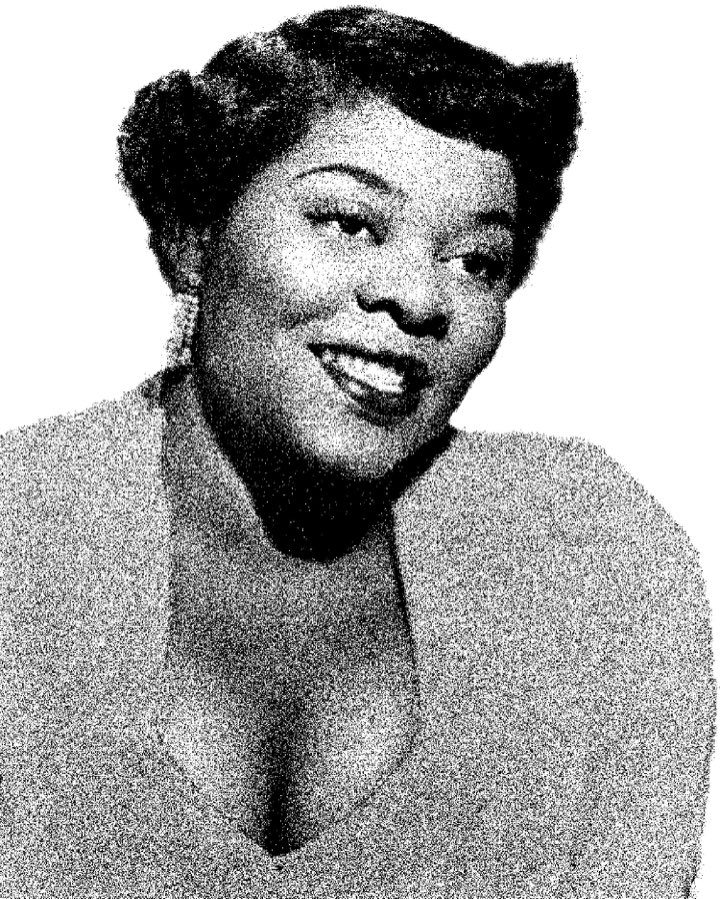
Francine Washington
By Jamie Kalven
For four decades, Francine Washington has practiced a singular style of leadership on behalf of Chicago public housing residents – a disenfranchised, misunderstood, and feared population widely viewed by fellow Chicagoans not as neighbors, but as a problem to be solved.
I worked closely for more than a decade with Francine at Stateway Gardens, the public housing development where she and her family lived. She was president of the Local Advisory Council (LAC), the representative body elected by residents. I had several roles, including advising the LAC and reporting on the city’s implementation of its Plan for Transformation to demolish public housing high-rises and forcibly relocate residents.
Beginning in the mid-1990s, Francine and I worked together almost daily. She used her formidable intelligence, mother wit, and rhetorical skills on behalf of her neighbors as public and private institutions abandoned the high-rises. Her spirit was contagious. Strange to say, I have never felt freer or taken more joy in a struggle against long odds than during those years.
Stateway Gardens was often referred to as the poorest community in the nation. This deeply offended Francine. “We’re not poor,” she declared. “We’re broke. To be poor is a condition of the spirit. To be broke is a temporary inconvenience.”
Society had a one-dimensional view of public housing as sites of disorder and despair, but Francine took every opportunity to communicate the fundamental reality: These were communities as complex, mixed and rich as any in the city.
Francine’s indignant defense of her community was, it seems to me now, an act of narrative self-defense. In American society, poverty is, among other things, a narrative phenomenon. Instead of the story of rigid structural inequalities, it is about the supposed moral failings and pathologies of those labeled “poor.”
Francine has constantly asserted and embodied a counter-narrative. She and her husband Larry lived at Stateway Gardens “by choice,” as she put it. It was the “beloved community” where she felt most deeply at home. She evoked its ethos with her distinctive poetry: “Nobody cares about us but us,” and “When we have nothing, we share it.” At a time of panic and lurid news stories about gangs, she captured the texture of life in public housing by speaking of “our in-laws and our outlaws.”
Residents never doubted that she had their best interests at heart and would fight for them. I often joined her as she negotiated with the CHA, the federal government, police and real estate developers. It always gave me pleasure to watch her outmaneuver people who underestimated and patronized her.
Over the last 25 years, the city has largely dismantled its public housing, including Stateway Gardens. Yet Francine persists. As president of the Central Advisory Council, (the citywide assembly of LAC presidents) and a member of the CHA Board of Commissioners, she is the conscience of a city that would rather forget than reckon with the broken promise of public housing.