Booker T. Washington
Reflections written by the great-great-grandchildren of Booker T. Washington.
Reflections on Booker
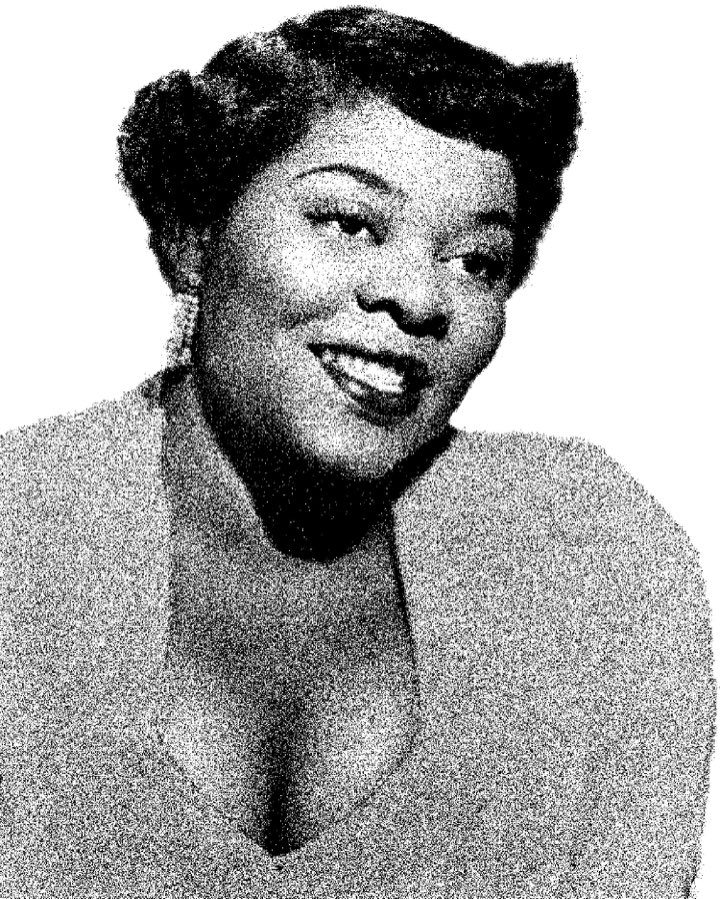
Amanda Washington-Lockett
I am a proud fifth-generation HBCU graduate, a Spelman woman, a Bison baby (my parents met on the campus of Howard University), and my grandparents walked the hallowed grounds of Hampton University and Fisk University years before I ever stepped foot on an HBCU campus.
Today, I have the privilege of serving as President of TM² Executive Search, the nation's only executive search and leadership solutions firm exclusively serving HBCUs, Predominantly Black Institutions, and Historically Black Community Colleges. My doctoral research at the University of Pennsylvania, which examined presidential retention and person-organization fit at HBCUs, prepared me for this work in ways I could not have anticipated. Every day, I have the honor of working alongside these storied institutions to identify and place leaders worthy of their legacies. I love this work and that love did not begin with a title, a dissertation, or a firm. It began with two people I consider among the greatest leaders in the history of Black higher education.
Booker T. Washington and Olivia Davidson Washington did not simply found a school. Together, they built an institution that has endured for more than 140 years. Olivia was not a supporting character in that story. She was Tuskegee's first major fundraiser, and the operational foundation upon which the institution's earliest years were built.
Mother Tuskegee, shaped by their shared vision and complementary leadership, has served as a beacon of hope through Reconstruction's collapse, through Jim Crow, through the Civil Rights Movement, and through every political and economic season that has threatened the survival of Black institutions in America. Tuskegee is still standing, and that is not a coincidence. Strong leadership is the foundation of institutional longevity. Tuskegee's endurance is a testament to leadership that was disciplined, mission-driven, and clear about what the institution existed to do and for whom.
When I study the model of how my great-great grandparents recruited faculty, cultivated donors, and built a culture that outlasted them both, I do not see history. I see a masterclass in the work I do every day. My doctoral research is ultimately a scholarly approach to the question Booker and Olivia were already answering in practice more than a century ago: who belongs in this seat, and what does this institution need from its leader to endure?
I carry Booker and Olivia Washington's legacy into every engagement, honoring not just who they were, but what they believed these incredible institutions could become.
A Letter of Reflection: On Booker T. Washington & the Weight of a Name
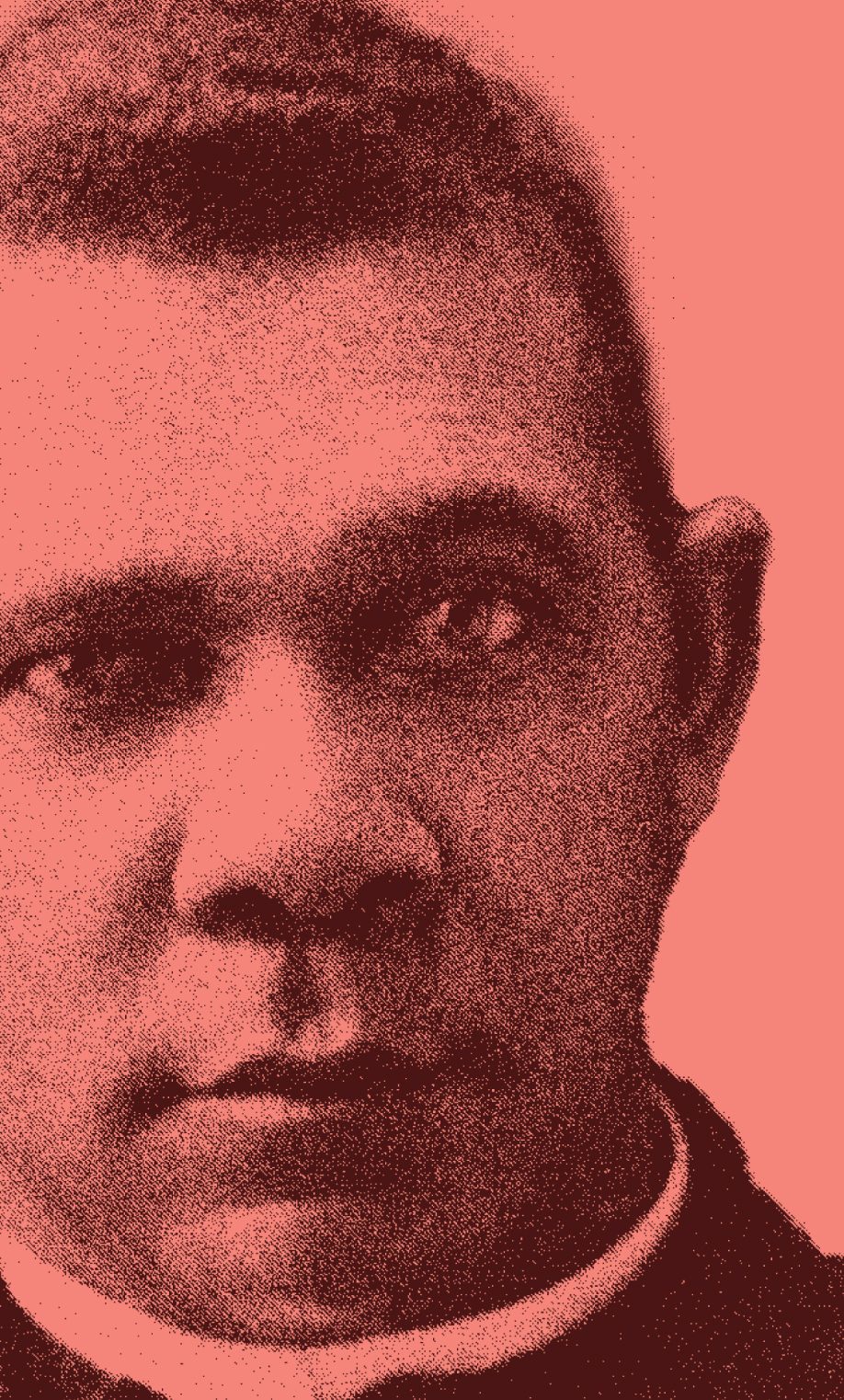
Noah Washington
There are people who shape history. And then there are people whose history shapes you before you ever have the chance to choose it.
Booker T. Washington is both for me.
Born into bondage in 1856 on a Virginia plantation, with no last name, no formal education, and no guarantee of a future. What he built from that beginning, Tuskegee Institute, is a national platform, the true embodiment of the philosophy of self-reliance and economic independence. The kind of story that sounds more like myth until you realize the man was real, the struggle was real, and the blueprint he left behind is still being used from the Rosenwald schools to the current day NAACP. His legacy impacted more than what most know.
Academics and scholars have long tried to put Washington in a box, reducing him to his accommodationist stance and measuring him solely against the more confrontational demands of his era. But that framing misses something essential. While others preached the gospel of the "Talented Tenth," Washington was thinking about the other nine. The ones who were too old to learn to read or write. The ones who would never sit in a lecture hall or debate political theory, but who could skin a hog, lay a brick, sew a garment, and build something from nothing. He understood that economic self-sufficiency was not a retreat from freedom. It was the foundation of it. That if you could sell a skill, command a wage, and own what you produced, you had something that no political speech could give you and no law alone could take away. He was not asking Black America to abandon the fight. He was trying to make sure that all of Black America, not just its brightest, not just its most educated, had something to stand on while the fight continued.
I won't pretend that Booker T. Washington was without contradiction. History doesn't afford him that courtesy, and neither do I. That tension, between pragmatism and protest, between building within a system and demanding that the system change, is one of the most honest fault lines in Black American intellectual history. I sit with that tension. I don't resolve it. But I carry it, because understanding it makes my own work more honest.
What I choose to hold onto is this: Booker T. Washington believed that the pen, the podium, and the institution were weapons. He used all three. He understood that narrative was power long before media theory gave it a name. He built a school, yes, but he also built a communications infrastructure. He cultivated press relationships, wrote prolifically, and understood that controlling your story was inseparable from controlling your destiny.
That is the inheritance I did not ask for but cannot put down.
I am a journalist. A communicator. A playwright. I chose all of these titles so that at the end of the day I can reflect the work that is actually done between these mediums. Become a builder. I work at The Atlanta Voice, one of the oldest Black newspapers in the country, telling stories that mainstream outlets overlook or flatten. I work at Fanbase, a social media platform built specifically for creators who have historically been undervalued and underserved by the platforms that profit from them, Invested in by Black people all over the world, which is able to be done as a result of a piece of legislation that MY president, Barack Obama put into action, called, The Jobs act. I write and produce theater that asks Black audiences to see themselves fully, not as footnotes.
Every single one of those choices traces back to something my great-great-grandfather understood: that Black people building their own tables, their own media, their own institutions, their own economies, is not a consolation prize. That is the point.
I think about him when I'm filing a story that someone powerful would prefer went untold. I think about him at the start of every week thinking of what stories to write and ask myself, ‘What story would he of told’ I think about him when I'm at Fanbase, working on a platform that exists precisely because marginalized groups deserve better than what they were being given.
Legacy is a strange thing. It is not simply what a person accomplished. It is what survives them, the parts that get argued over, revised, reclaimed, and carried forward by people who never met them but live inside the world they helped make.
I carry the name Washington. I carry the questions he left unanswered. And I carry the conviction, stubborn and unshakeable, that the work of telling our stories, building our platforms, and creating our own seats at the table is not finished.
It may never be finished.
But I intend to keep building anyway.
Personal Statement
John Washington
The most unpredictable constant in life is life, yet there is an antithesis to this phrase. Nothing is coincidental in life. Every interaction carries purpose, and my path toward becoming an archivist and my connection to Booker T. Washington are not the exceptions to the truth. When you know where you come from and have access to the documents that prove it, it can shape what you think is possible. I believe information is worth more than any riches.
Booker T.Washington was not a man of myth and legends, but he is a tangible historical figure who created a lasting impact. Tuskegee was not merely a symbolic institution, but it is a living institution with infrastructure and living documents waiting to be preserved and read for future generations. Washington left a paper trail of speeches, letters, and journals telling his story and filling in missing pieces of his complex history. This is where my path comes in.
An archivist's main objective is to preserve primary sources of documents for future generations to tell stories. Archivists make sure that the information from any collection or set of records is accessible to the right people and it’s managed in an ethical manner. I believe my job is not to “tell” Booker T. Washington’s story but to preserve and let his narrative and history speak for themselves. To clarify, I want to support researchers who have a topic in Washington, and that they either clear some speculative history around them or prove it.
My aspirations to become an archivist and my relationship to Booker T. Washington were not by mistake. It was a direction I was always moving toward; I just had to arrive at it. The most beautiful part of my job is when I run unexpectedly into Booker T.Washington in documents or photos, I feel as if it’s a sign that I am moving in the right direction.